
Audiovisual production insurance: coverage and importance
Why is audiovisual production insurance essential?
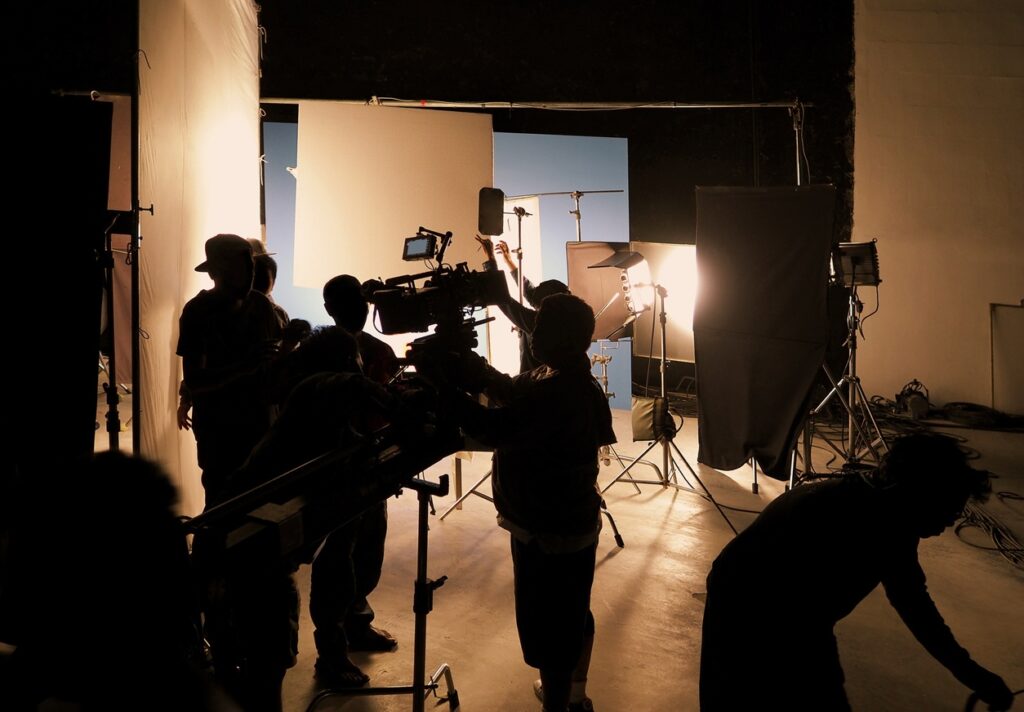
Audiovisual production insurance. Every professional shoot involves multiple risks: high-value equipment, changing locations and a large number of exposed personnel. Even the smallest mistake can result in huge losses. An operator could accidentally damage a camera, drone or lighting equipment. Without adequate insurance, the costs of repair or replacement would fall directly on the production company or professional”.”
In addition, both the technical team and actors may suffer accidents (falls, electrocutions, etc.) which may lead to claims.
Specific insurance not only protects financially in these scenarios, but also guarantees the continuity of the project.
On the other hand, compliance with regulations is key. In order to film in public spaces, municipalities and organisations require an insurance policy. Civil Liability (CR) covering damage to third parties
In fact, the filming permit usually requires a formal “civil liability insurance” to be included in the documentation.
Collective agreements in the audiovisual sector also provide for compulsory minimum coverage (e.g. for accidents at work of contracted staff).
Similarly, platforms (Netflix, RTVE, etc.) and support funds require proof of current policy.
In short, audiovisual insurance is a legal and strategic requirement to protect investments and avoid penalties or onerous claims.
Key coverages
Audiovisual production policies are modular, but these basic guarantees are usually included:
General Civil Liability (CR).
Covers personal injury or material damage caused to third parties during filming.
For example, if a camera falls and damages a passer-by's car, the policy will pay for the repair.
It also covers claims for injuries to members of the public or outside workers, and even damage to other people's sets.
Audiovisual Equipment Insurance.
Protects technical equipment - cameras, spotlights, drones, etc. - from accidental damage, theft or loss during filming and transportation.
For example, if a drone crashes or a spotlight gets wet in the rain, coverage pays for repair or replacement.
Some policies even cover rented equipment.
Equipment accidents (Employer's Liability).
Includes coverage for accidents at work of technical and artistic personnel (actors, cameramen, sound technicians, extras). Employers“ liability: ”claims by employees for injuries or illnesses sustained during production".”
This covers medical leave or compensation for falls, blows or illnesses on the set.
Cancellation or interruption of filming.
Sometimes included in comprehensive policies or as an extra. It covers additional costs if production has to be halted due to unforeseen circumstances (illness of a key actor, weather conditions, location problems that cannot be rectified). For example, it can cover compensation to suppliers or the cost of reshoots if a shoot is postponed.
Damage to locations and sets.
It covers material damage to the places where the film is shot (houses, buildings, monuments) or to sets built for the film. A mistake in the electrical installation that causes a fire on the set, for example, would be covered.
Loss of recorded material.
Some advanced policies include the cost of retakes if the original material is lost (due to technical failure, accidental deletion, hard drive theft, etc.).
This ensures that the investment in filming is not totally lost.
Factors influencing price
The premium for audiovisual insurance depends on many variables:
Shooting budget.
Larger production means higher premiums.
Coverage contracted and sums insured.
More guarantees (e.g. including cancellation or very expensive equipment) increase the price.
Duration of filming.
Insuring 1 week is much cheaper than 6 continuous months.
Value of technical equipment.
The higher the declared value of cameras, drones and equipment, the higher the premium.
Locations.
Filming on location or in several countries (logistical risk) tends to make the policy more expensive.
Producer history.
Customer experience and claims experience are also considered.
Checklist for audiovisual insurance
Analyse the risks of the project: where is it shot, what scenes have pyrotechnics or action, will there be drones? Each element adds risks to be adjusted in the policy.
Verify coverage and limits:
Ensure that the capital sums cover the actual value of equipment and possible indemnities (e.g. CR of at least €1M to cover major damage).
Include all key assets and persons:
Declare all equipment, locations, and cast involved (for employer's liability). Do not omit guest actors or hired equipment.
Plan ahead:
Ideally, insurance should be taken out at the pre-production stage. Taking it out “last minute” can limit options and create gaps in coverage.
Consult a specialised broker:
An experienced A/V broker (such as PIB Group Iberia) can advise on the best combination of hedges and negotiate preferential terms.
Why choose PIB Group Iberia?
PIB Group Iberia specialises in corporate and specialty insurance, with extensive experience advising the audiovisual sector.
Our approach is consultative: we analyse each production, identify specific risks and negotiate the most comprehensive coverage with different insurers, always aimed at the client's total protection. Trust our multidisciplinary team to ensure that your filming has the right protection and we process the policy in an agile and personalised way.
Speak to a specialist advisor and ask for here more information without obligation.