

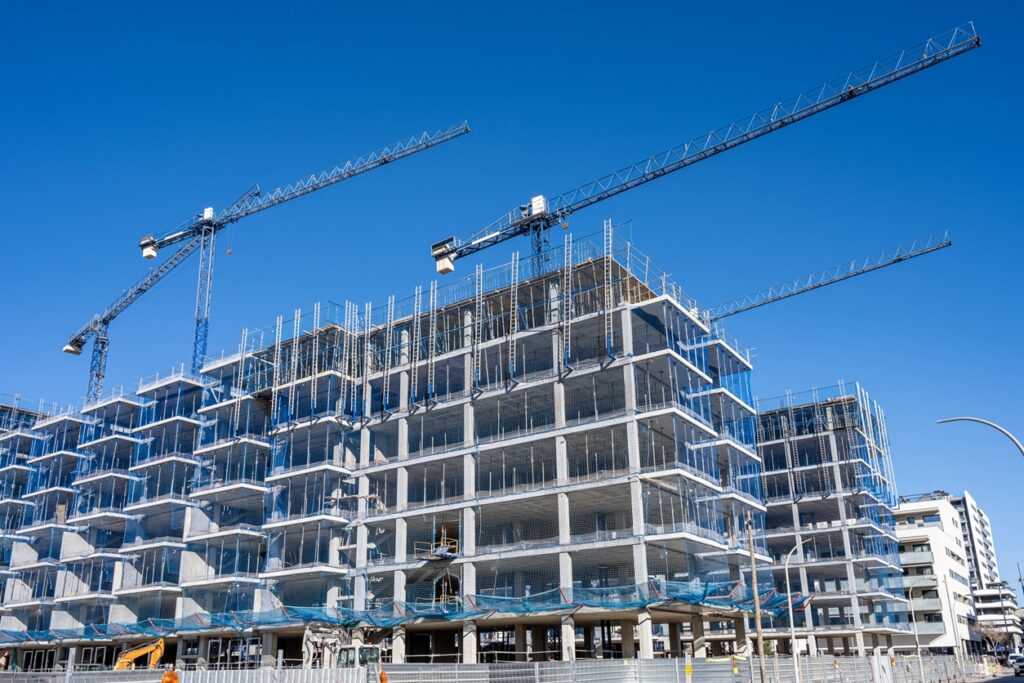
What insurance does a construction project need? Complete guide for developers, builders, and self-builders
A construction project involves much more than just erecting a building. Accidents, fires, damage caused by weather phenomena, theft, damage to neighboring buildings, or construction defects capable of causing significant economic losses can occur from the start of the work until the final delivery.
Therefore, choosing the right ones insurance for a construction project It is a fundamental decision to protect both the investment and the companies and professionals involved in the project.
But which insurance policies should be taken out? Are they all mandatory? Does a developer, a construction company, or someone who is building their own home need the same coverage?
The answer depends on the characteristics of each project. In this guide, we review the main insurance policies related to a construction project and explain the role each plays.
Why is it important to properly secure a work of art?
A construction site concentrates numerous risks in a single place.
For months, workers, subcontracted companies, heavy machinery, temporary facilities, and high-value rialmaterials can coexist. At the same time, the work can affect homes, vehicles, premises, or infrastructure located around the construction site.
Imagine a strong storm causing damage to a part of the structure under construction. Or that during excavation an underground conduit is accidentally damaged. It can also happen that a fire destroys stored rialmaterials or that damage occurs to the property located next to the construction site.
Any of these situations can represent a considerable cost.
Adequate insurance planning allows for identifying these risks before starting work and determining what coverage is necessary based on the project.
What insurance does a construction project need?
There is no single insurance that covers all the risks associated with construction.
The usual practice is to combine different policies that cover the work, the responsibilities of its participants, and certain risks arising after its completion.
These are some of the most important insurance policies.
All Risk Construction Insurance (TRC)
The Sure All Risk Construction, also known as TRC, is one of the main tools for protecting a work while it is being executed.
Its purpose is to cover, within the limits established in the policy, the accidental rialand unforeseen damages that the construction itself may suffer during the construction period.
Depending on the contracted conditions, you can offer protection against situations such as:
- fires and explosions;
- weather phenomena;
- damages caused by water;
- theft;
- vandalism;
- errors during execution;
- Accidental damage to rialmats;
- certain damage to facilities or equipment used in the project.
The specific coverage will always depend on the conditions of each policy, so it is especially important to review exclusions, deductibles, limits, and extensions.
The TRC is usually contracted before the start of the work and must be maintained until the completion of the work, according to the established conditions.
Civil Liability Insurance for Construction
What happens if third parties are harmed during a construction project?
Consider, for example, the accidental fall of rialmarbles onto a parked vehicle, damage caused to a neighboring building, or the breakage of a conduit during excavation.
In these situations, a claim for civil liability may arise.
The Civil Liability Insurance for Construction It aims to protect the insured against the economic consequences of third-party claims arising from personal injuries or rialproperty damage for which they are liable and which are covered by the policy.
Through the Corporate Civil Liability guarantee, claims arising from work-related accidents suffered by employees are covered (this is the main source of claims in the construction risk).
Promoters, builders, contractors and other professionals may need different coverages depending on their activity and their involvement in the project.
That is why it is important to check who is listed as the insured person and what activities and responsibilities are actually covered.
One-year guarantee
The ten-year insurance It comes into play once construction is complete and responds to a logic different from the All-Risk Construction policy.
The Law 38/1999, The Building Regulations establish a system of guarantees against certain rialmaterial damage caused by defects or construction flaws.
The ten-year warranty covers rialmaterial damage caused by defects or flaws that originate from or affect structural elements such as foundations, supports, beams, beams, or load-bearing walls and that directly compromise the mechanical strength and stability of the building.
In the cases provided for by law, this guarantee is provided for by means of the corresponding ten-year insurance policy.
It is important to analyze each project because there are specificities and exceptions, especially in certain cases of self-promotion of housing.
Accident Insurance Agreement
Construction companies must also pay special attention to the obligations arising from the applicable collective agreement.
The General Construction Sector Agreement provides for compensation in certain cases of death or disability resulting from work-related accidents or occupational diseases.
The collective accident insurance allows companies to cover the corresponding economically insurable obligations under the applicable collective agreement and the contracted conditions.
Before hiring them, it is essential to check the required capital and keep it updated whenever there are changes to the agreement.
Machinery and equipment insurance
Excavators, cranes, lifting platforms, construction equipment, and other machinery can represent significant investments for a construction company.
In addition to its economic value, a malfunction or a serious damage can cause delays and affect the development of the work.
Depending on the type of machinery and the contracted service, certain accidental damage, fires, theft, or other risks can be covered.
At this point, it is crucial to analyze what machinery is owned, what is leased, and what responsibilities each party bears.
Surety insurance
In certain projects, especially public contracts or large private projects, it may be necessary to submit guarantees to ensure compliance with certain contractual obligations.
In addition, Law 38/1999 on the Planning of Construction establishes the obligation for the construction promoter to guarantee the return of the amounts paid in advance plus legal interest, through a guarantee insurance contract.
The Guaranteed insurance It can be used as a means of ensuring that the borrower meets certain obligations towards a third party under the agreed terms.
For construction companies, it can represent an alternative to certain bank guarantees, depending on the transaction and the requirements of the beneficiary.
TRC insurance and ten-year insurance: are they the same thing?
No. Although both are related to construction, they respond to different risks and moments.
The All Risks Construction It primarily protects against certain damages that occur while the work is being executed.
The ten-year insurance, For its part, it is related to certain structural damages that appear after the completion of the construction and maintains the corresponding warranty for ten years.
For example, if an accidental fire causes damage during the execution of a construction project, the coverage analysis would be carried out primarily within the TRC and the other existing policies.
If years later damage resulting from a structural defect that compromises the stability of the building occurs, the ten-year warranty could be triggered, provided that the requirements set out in the regulations and in the policy are met.
Therefore, they are complementary supplements and do not replace each other.
What insurance does a promoter need?
The promoter assumes a particularly relevant position within the project.
Depending on the characteristics of the construction, it may be advisable to analyze:
- All Risks Construction;
- Civil liability of the promoter;
- one-year guarantee;
- guarantee insurance;
- other specific guarantees associated with the project.
In addition, the funders or certain contracts may establish additional insurance requirements.
Therefore, the insurance program should be reviewed before the start of the work and not when the work has already begun.
What insurance does a construction company need?
The construction company presents a different risk profile.
In addition to the damages directly related to each project, you must protect your own business activityrial.
Among the coverages that may be necessary are:
- Civil Liability of the Constructor;
- Accidents of the Convention;
- machinery and equipment;
- vehicles and fleets;
- All Risks Construction;
- security deposit;
- damage to own facilities;
- other coverages linked to their activity.
The appropriate solution will depend on the size of the company, the number of employees, turnover, projects executed, use of subcontractors, and the characteristics of the works.
What insurance does an autopromoter need?
More and more individuals are choosing to build their own homes and act as self-promoters.
Although certain obligations may be different for a real estate promotion intended for sale, this does not mean that construction is exempt from risks.
A self-promoter should especially value:
- All Risks Construction;
- Civil Liability of the Owner/Promoter;
- a ten-year guarantee when necessary;
- coverings related to machinery or installations where appropriate.
The ten-year insurance deserves special attention.
The Building Regulation Act provides for an exception to the requirement to establish a ten-year guarantee for the individual self-builder of a single single-family home intended for personal use, although subsequent transfer within the legal timeframe may generate additional requirements.
Therefore, it is advisable to analyze each case before starting the project and also before a possible subsequent sale of the property.
When should construction insurance be taken out?
One of the most common mistakes is to wait too long.
Some coverages must be properly planned from the beginning of the work.
A project that is already well advanced may present greater difficulties in being insured, require additional information, or limit the available alternatives.
It is advisable to study the insurance plan during the planning phase.
This allows you to review in advance:
- total budget;
- expected duration;
- constructive characteristics;
- location;
- adjacent buildings;
- participating companies;
- used machinery;
- outsourcing;
- insured capitals;
- franchises;
- limits and sublimits;
- Relevant exclusions.
The more information there is about the project, the more accurate the risk analysis can be.
7 common mistakes when securing a construction project
Thinking only about the price
Comparing the premium alone can lead to the conclusion that you should take out policies with significant differences in limits, deductibles, or exclusions.
Undervaluing the cost of the project
Capital must be related to the values that truly need protection. An incorrect statement can cause problems in the event of an accident.
Do not review the exclusions
Two seemingly similar insurance policies can offer very different levels of protection.
Contracting insurance when the work has already begun
It is advisable to analyze the coverage before the start of the work.
Not communicating relevant changes
Significant changes to the budget, duration, technical characteristics, or scope of the project can affect the risk and must be analyzed during the policy’s validity.
Confusing the TRC with the ten-year insurance
They protect against different risks and act at different times.
Using a standard solution for all works
A single-family home, an industrialrial building and a residential development present different exhibitions.
The insurance program should adapt to the real characteristics of each project.
How much does it cost to insure a work?
There is no single price for construction insurance.
The premium will depend, among other factors, on the type of project, budget, duration of the work, construction techniques, location, coverage requested, capital, franchises, and the experience of the participating companies.
Therefore, comparing prices alone can be misleading.
A more affordable plan does not necessarily provide the same protection. The comparison should be made taking into account both the premium and the coverage, limits, excess amounts, and exclusions.
How to choose the right insurance for a construction project?
The first step should not be to directly apply for a policy, but to identify the risks.
A good insurance strategy begins by analyzing what could happen, who would bear the economic consequences, and which risks can be transferred to the insurance market.
Based on that analysis, coverage can be defined and available alternatives compared.
At PIB Group Iberia, we work with different insurers to design solutions tailored to companies and projects. Our goal as an insurance broker is to analyze the risk, compare the available alternatives, and support the client throughout the process of contracting and managing potential claims.
If you are embarking on a construction project, real estate development, or building project, having specialized advice from the very early stages can help you detect potential exposures before they become a problem.
Frequently asked questions about construction insurance
What insurance do I need to start a project?
It will depend on the type of work and who promotes and executes it. Among the main coverages that must be analyzed are Comprehensive Construction and Civil Liability, in addition to other policies applicable to the project.
Is it mandatory to contract an All Risks Construction policy?
There is no general obligation to hire a TRC for any construction project. However, it can be required contractually and is an important tool for economically protecting the project against certain damages during its execution.
When is ten-year insurance mandatory?
The obligation depends on the assumptions provided for in the Building Regulation Act. In buildings whose primary purpose is housing, there is an obligation to establish the ten-year guarantee in the terms legally established, with certain exceptions.
Who takes out ten-year insurance?
The Building Regulation Act states that the promoter is the party entitled to take out the guarantees provided for in Article 19 thereof.
Does Civil Liability Insurance cover the damages caused by the construction itself?
Its main purpose is to respond to certain claims from third parties. The rialmaterial damage caused by the construction itself is covered by another type of insurance, such as the All Risks Construction policy, according to the contracted terms.
Does a self-promoter need a ten-year insurance policy?
There is a legal exception for the individual self-promotion of a single single-family home intended for personal use. However, a subsequent transfer within the legally prescribed timeframe may generate additional obligations, so each situation must be examined individually.
Speak to a specialist advisor and ask for here more information without obligation.
Related articles: